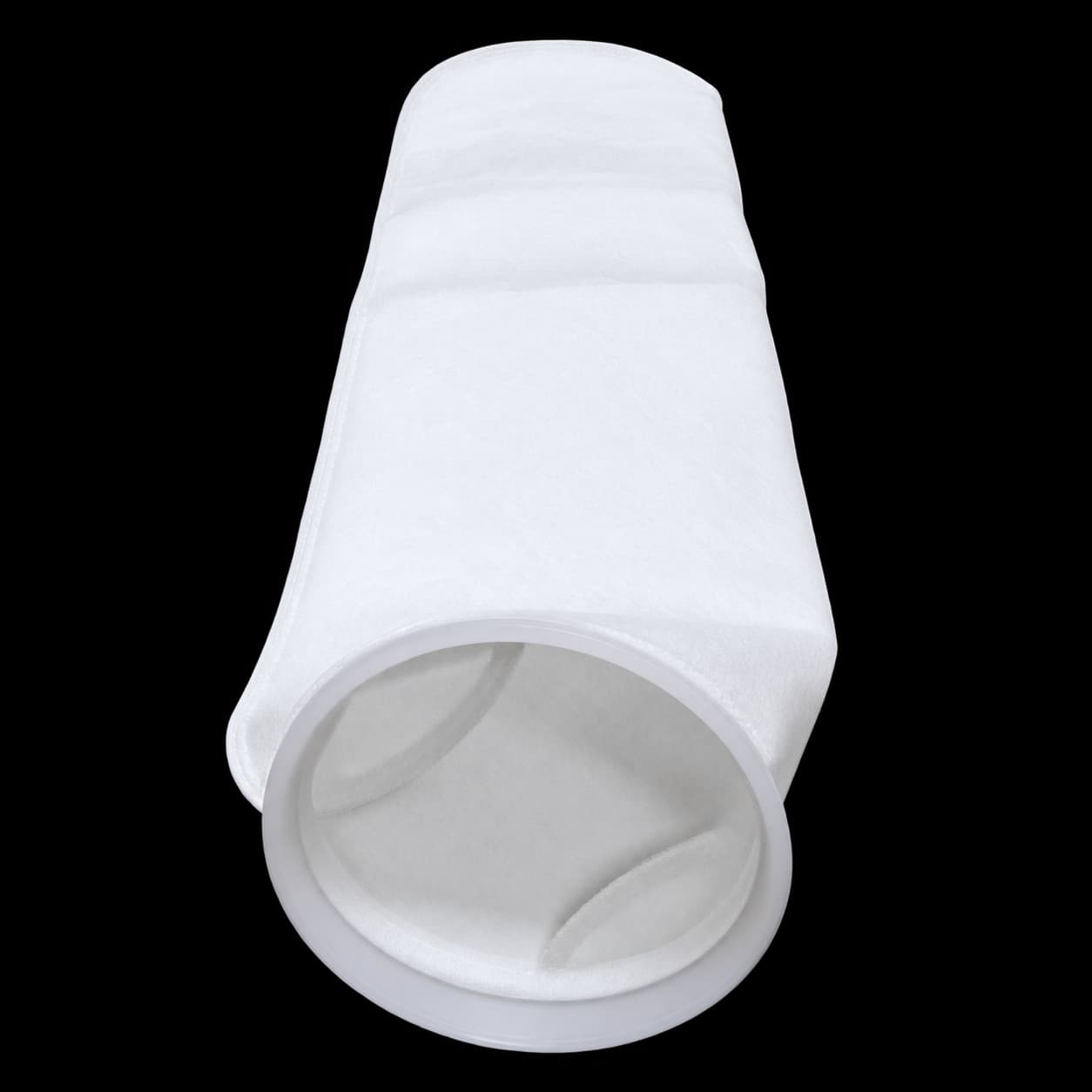
Identify the liquid and particles before choosing a rating.
Confirm the complete bag and ring fit in the housing.
Particle removal is different from dissolved-contaminant treatment.
Define what needs to be removed
Describe the suspended particles or contamination in the liquid and the downstream equipment you want to protect. Catalogue applications include process water, machine coolants, wastewater, and food or pharmaceutical processes.
A bag filter retains particles as the liquid passes through the media. It should not be described as removing every dissolved substance or replacing all other water-treatment stages. Share any specific quality requirement so the filtration role can be confirmed.
Treat micron ratings as a specification to verify
The supplied PARK liquid-filter entry lists 1.5, 2.5, 7.5, 10 and 34 micrometre options. Confirm the available selected rating, the test basis and the retention required by your process. These values describe catalogue options, not one fixed performance level.
A smaller listed number alone does not confirm the best filter. Discuss the contaminant load, required flow and pressure conditions, as well as the performance evidence for the selected medium.
Match media to the actual fluid conditions
PARK lists polypropylene media for liquid bag filters. Confirm compatibility with the liquid identity, concentration where relevant, temperature and any chemical exposure. Do not infer compatibility from a broad industry category.
For food, pharmaceutical or another controlled process, include the application-specific documentation requirements in the enquiry. A listed application is not a substitute for confirming the selected product and the evidence your process requires.
Check the bag, ring and housing together
The catalogue includes polypropylene or stainless-steel sealing-ring options and customer-specific bag sizes. Record the housing make or model, bag diameter and length, ring dimensions and the installation arrangement.
Include an existing drawing or part reference if you have one. The seal needs to suit the housing; bypass around an incorrectly fitted bag can undermine the intended particle-removal function.
Send the details that move a quotation forward
A useful enquiry combines fluid conditions with the exact assembly. If some information is not known, say which details are available and which need confirmation.
Replacement planning depends on the process and operating evidence. Ask for the selected product information and follow the equipment guidance rather than assuming a fixed replacement interval.
- Liquid identity, temperature and relevant concentration
- Contaminant description and required particle rating
- Flow and pressure information
- Housing reference, bag dimensions and ring arrangement
- Quantity and process documentation requirements
A question buyers ask
Does a liquid bag filter remove dissolved chemicals?
The catalogue liquid bags are described for suspended-particle removal. Do not assume removal of dissolved chemicals or all microbial contaminants. Specify the contaminant and required treatment result so the filtration role can be confirmed.